We are saying “so long, farewell, auf Wiedersehen, adieu” to our European friends. Of course, it was at the start of 2020 that the UK actually left the European Union, but some four and a half long years since the shock outcome of the Referendum of 23rd June 2016, the ‘transition’ period is now over. There is a semblance of finality to what has been a tortuous Brexit process (and will likely continue to be). In the five and a half years since the referendum was announced I have been struck at how binary the argument became. We have become a polarised people – with either a staunch defence (even love) of, or staunch attacks on, the European Union. The truth is, as ever with such complex issues, a more nuanced assessment of the benefits of being in or out of the EU is more realistic.
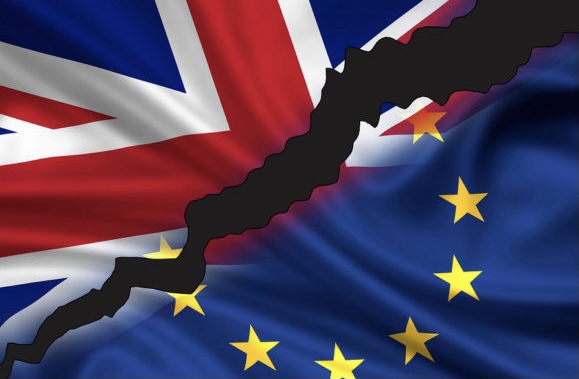
I believe that the vote to leave the European Union was a misjudgement. Dozens of UK YouGov polls, conducted every single week since the referendum, indicate that more people in the UK consistently agree with this assessment than disagree. Stephen Farry MP expressed it aptly this week, when he said:
“In this modern world, we are all interdependent. We can’t maximise prosperity, address climate change, fight pandemics, and project influence around the world in splendid isolation.”
I am going to go even further and assert that this ‘interdependence’, embodied by the European Union, has been the bed-rock of a largely stable and peaceful Europe. It has also played a huge role in bringing stability to Northern Ireland. We are in very real danger of taking this international and local stability for granted. History tells us this is a massive mis-calculation.
The story of Altiero Spinelli, one of the European Union’s founding fathers, encapsulates the importance of a ‘united European project’. Spinelli was imprisoned for ten years for opposing Mussolini’s fascist regime. In 1941, whilst in prison he and a fellow prisoner completed the Ventotene Manifesto. Entitled Per un’Europa Liberia e Unita (For a Free and United Europe), the manifesto argued that the war against the virulent nationalism of the fascist powers would be empty if it simply led to the re-establishment of the old European system of sovereign nation-states. Spinelli believed, should this happen, further war would be inevitable.
Jump forward to 2021 and I believe the basic premise is the same. The driving force for some Brexiteers to be such a ‘sovereign nation-state’ is, in my view, very short-sighted. If the UK exit from the EU were to precipitate a wider break-down of the institutions, this could lead to a substantial destabilisation of international relations in the longer term. It may sound far-fetched but history teaches us, time and again, just how rapidly relations can deteriorate.
The primary aim of the EU’s founding fathers was to connect European countries so closely and intimately that they would not be able to go to war with one another. EU founding father & French Foreign Minister, Robert Schuman, declared…
“We are carrying out a great experiment, the fulfillment of the same recurrent dream that for ten centuries has revisited the peoples of Europe: creating between them an organization putting an end to war and guaranteeing an eternal peace.”
Robert Schuman, French Foreign Minister speaking in London in May 1949
The Schuman Declaration, a year later, which proposed the creation of a European Coal and Steel Community, reiterated how such a measure was primarily aimed at securing peace in Europe.
“World peace cannot be safeguarded without…efforts proportionate to the dangers which threaten it. The contribution which an organised…Europe can bring…is indispensable to the maintenance of peaceful relations.”
Schuman Doctrine, May 1950.
The fact that Europeans were obsessed with peace and stability in the immediate aftermath of two world wars in the 20th century is hardly surprising. It is noteworthy, however, how effective the EU has been in helping prevent us from descending into fresh macro-level conflict over the last three-quarters of a century. The vision of Spinelli, Schuman et al has been realised. This was not guaranteed in 1945. The failures of similar attempts in the inter-war years were a stark reminder of how things could go badly wrong. The construction of co-operative international European institutions, big enough and strong enough to relegate the virulent nationalism of the early 20th century from the international stage (1990s Yugoslavia excepted), is a worthy achievement.
However, nationalistic fervour will never go away fully. It is always bubbling under the surface. Sadly, unscrupulous politicians can easily exploit this mind-set of ‘fear’. And they do. It is worrying, therefore, that the success of the EU in bringing peace and stability is very much taken for granted. For most of us it is inconceivable that grand scale world conflict is very likely as we move into the third decade of the 21st century. However, as Europeans approached the very same decade of the 20th century they too believed that a second worldwide conflict was similarly inconceivable.
In Northern Ireland we don’t need historians to tell us of the consequences when the destructive excesses of nationalism are not curtailed. Many of us lived it. It was an attempt to combat these excesses which formed the very ideological foundations for a united Europe. In 1995, the late John Hume cited Spinelli:
“Ireland and Yugoslavia were two places that needed a new, over-arching order to permit different communities to live and work together in harmony.”
Altiero Spinelli, writing in an Italian prison, after opposing fascism, 1942
It took time, but the EU grew to be just that ‘over-arching’ body. As the institutions of the EU became far-reaching, any conflict between British and Irish identities on the island of Ireland began to become a little less important…slowly.
Why then did 51.9% of those voting in the referendum opt to leave the EU? The answer has to lie in the success of the repeated attacks upon the EU institutions, from both the political left and right. Punch after punch landed and their marks became ingrained in the public psyche, leaving the EU badly bruised. History will also undoubtedly show that the vote for Brexit was, in part, as a result of the EU’s failure to reform itself. The institutions appeared out-of-touch, leaving the whole project susceptible to those incessant attacks. The were also plenty of unheeded warning shots.
Both right and left wing critics point to the EU’s refusal to yield when it all but appeared to ignore the French and Dutch people in their votes against the new 2005 EU Constitution. Critics claim the EU simply ignored the electorate of those counties, in a show of arrogance, when it presented the Lisbon Treaty in 2007, which was generally regarded as a re-working of the defeated 2005 Constitution. The 2005 ‘no’ vote in the Netherlands had taken the EU by surprise. Eurosceptic parties had been at the political margins throughout the 1990s and early 2000s, but the 61.6% ‘No’ vote illustrated how the Dutch political elite and media were out of sync with the public. However, it is not clear that the EU, or the elites in member states, learned from the experience.
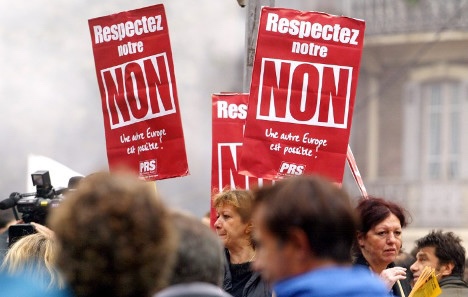
Photo: AFP
The Lisbon Treaty was presented in 2007, for adoption in 2009. Only Ireland held a referendum (2008) in which it rejected the treaty first time; only to quickly have a ‘successful’ second referendum in 2009 and ensure Ireland was no longer the only country to oppose the treaty (and the only to hold a plebiscite). Interestingly a ‘lack of understanding’ about the treaty was cited as a reason for defeat in 2008 in Ireland – perhaps another sign of the European institutions being out-of-touch with the voting public?
Left and right critics also point to the EU Commission’s ‘unelected’ nature. Whilst MEPs themselves are elected and they in turn approve those appointed to the Commission, the structure appears convoluted and different to what the UK public perceives as democratic and accountable. Even three years after the Brexit referendum, there was still controversy. This time it was over the appointment of Ursula von der Leyen, as the European Commission President in 2019, when she had not even been nominated by European Parliament. This provides further ammunition and evidence for those seeking to highlight the botched processes which the voting public don’t understand or like. The argument that national sovereignty was being taken away by ‘unelected bureaucrats’ was a gross over-simplification, but it was appealing and it was always a difficult line to combat. Repeated assertions that voters had no way of removing the unelected and unaccountable commissioners only worsened the situation…
“What is the point of having a vote if the real decisionmakers are unelected, unknown, and unaccountable? Those are the questions that are at the root of the EU’s problem with the democratic deficit.”
Cato Institute
Add to all this the labyrinthine processes and inter-relationships of the multitude of institutions, then we really do have a confusing picture of what the EU is about. The lack of understanding about how the institutions work inevitably leads to a sense of detachment from it within the general populace. The European Commission, The Council of the EU, the European Council, European Parliament and the European Court of Justice and then advisory bodies such as the Committee of the Regions and the Economic and Social Committee… is it any wonder people cannot relate? The confusion allowed journalists to lazily stir up a lot of hype over things which were mere ideational dialogue. For instance, they would attribute some ‘wild and whacky’, but threatening, ideas to so-called ‘eurocrats’ and present them as things which were likely to happen – even if they were not.
Since becoming PM in a coalition government in 2010, David Cameron had staved off mounting pressure within his own party for an EU referendum. However, when UKIP amassed 4m votes in the 2015 General Election and 80+ of his own Tory backbench MPs were spooked and threatening rebellion on the green benches, then Cameron (a remainer) tried to get the EU to reform. He asked for national parliaments to have the ability to block legislation originating in Brussels. This was refused. The EU had to know at this stage that a British referendum was the likely next step. However, it gambled that the UK public would not vote to leave the EU. It’s refusal to compromise on this occasion, and on prior occasions, played a part in pushing many of the UK electorate into the Leave camp. “If the EU was this uncompromising when a Brexit vote was imminent”, Brexiteers would argue, “imagine what it will be like if and when the vote to leave is defeated?”
Another crucial, but unfair criticism, of the EU institutions ahead of the referendum was its handling of immigration. The Cato Institute points to Greek and Italian failures to curb immigration on their own shores and then onward across Europe. Coupled with the ‘welcoming attitude’ of Germany and Austria toward those fleeing war torn countries, such as Syria, the media was able to present the EU as suffering an “immigration crisis”. It is true that the number of asylum seekers was significant in 2015-2016, but what is the alternative to allowing the asylum of those men, women and innocent children seeking to escape a cycle of war, squalor, misery, abuse and death in refugee camps? Do you return them to danger? Do you turn them back on dangerous waters? The EU was built to overcome the worst manifestations of nationalistic sentiment and to put human beings first, wherever they may come from. This is its strength. What the media were calling an “EU migration crisis” was in fact a global humanitarian refugee crisis, not of the EU’s making, but which required a humanitarian response.

The myth advanced by Brexiteers that immigrants are a drain on public resources was another effective line of commentary which encouraged the public to vote Leave. Increasing the levels of fear to get the vote out is nothing new, but sadly, one of the unintended consequences was a predictable rise in hate crime whilst simultaneously helping the Leave campaign. A report produced for the UK Government by the Migration Advisory Committee in 2019 has completely debunked the argument that EU migrants are a drain on public resources. The document found that EU citizens have little impact on UK wages, they pay more in taxation, are not linked to increasing crime rates and they contribute “much more” to the NHS than they consume. The report contrasts this with the UK-born population who had a deficit of £41.4bn and non-EU migrants who had a deficit of £9bn, concluding that “EU immigrants… are good for the economy.”
The impact of the The Brexit referendum result on Irish politics has been seismic. A slowly reforming NI, leaving ‘the troubles’ further and further behind, was fast becoming an acceptable political entity for a majority of Irish nationalists – but only whilst it was positioned within a framework of greater European integration and co-operation. The eroding importance of national identity, as economic borders and barriers between north and south tumbled and co-operation increased, engendered some sense of stability in Northern Ireland – possibly for the first time in its short history. Brexit smashed this and it has de-stabilised Northern Ireland, casting real doubt over its longer term future. This has resulted in the border question becoming more live than it has been since 1921. Unionists who supported Brexit have committed what had to be, even at the time, the most obvious act of political suicide ever. It is very difficult to discern how they failed to see it. I think the penny might be starting to drop now among all but the most tone-deaf unionists. In irony of all ironies, what might save unionists from a united Ireland, in the immediate future, is the rise of SF in the south. It isn’t a united Ireland which most soft unionists or non-aligned voters fear most – it is the spectre of a Sinn Fein controlled Irish Republic which strikes horror into the hearts of most non-republicans.
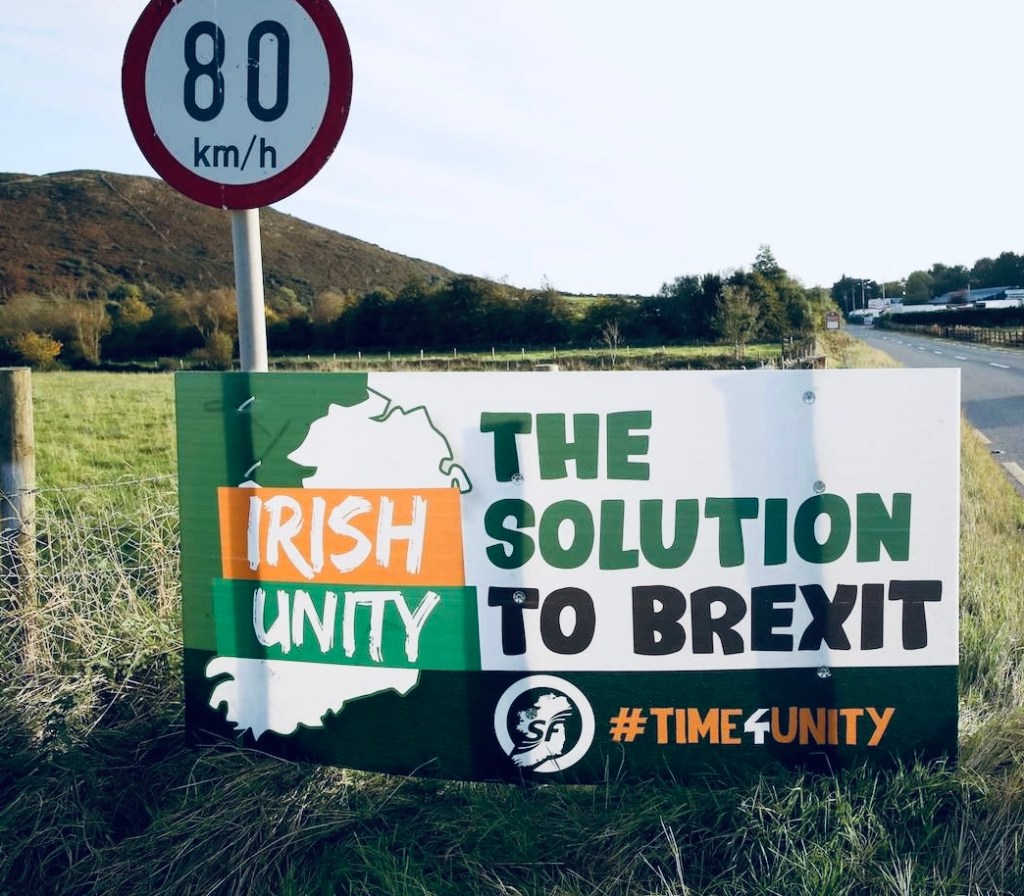
In conclusion then, the European Union has not been a failure – but it has had its failings. It has been a major success in achieving its primary goal of attaining peace and stability, but its over-complex and seemingly ‘untouchable’ structure has opened it up to accusations that there is a democratic deficit. Secondly, the EU’s inability to adequately reform itself and its alleged disdain for the outcome of popular votes in Holland and France opened it up to further criticism. Thirdly, the growth in size of the EU and the influx of asylum seekers from Africa and the Middle-East created a perfect storm for nationalistic tendencies within member states to flourish – the very tendencies the united Europe project was set up to overcome.
Brexit has the potential to greatly destabilise international relations in the long term if other countries follow the UK’s individualistic and nationalistic example. It has hugely destabilised Irish politics by bringing the border question back into sharp focus, just as it was fading into the background. Even the most politically naive must realise that a border poll in Ireland, and everything a campaign would involve, would make the Brexit campaign look like a Disney movie. Ireland is not ready yet to embark upon such a polarising path which could tear civic society apart and bring to the fore the extreme binary positions – much the same as what happened with the Brexit debate.
On balance, it would have been better to continue to fight hard for reform from within the EU. It was (and is) a project with flaws, but it is a project with something at its core which is worth fighting for.
The instability created by Brexit could cast a long shadow…
 MultifacetedLens